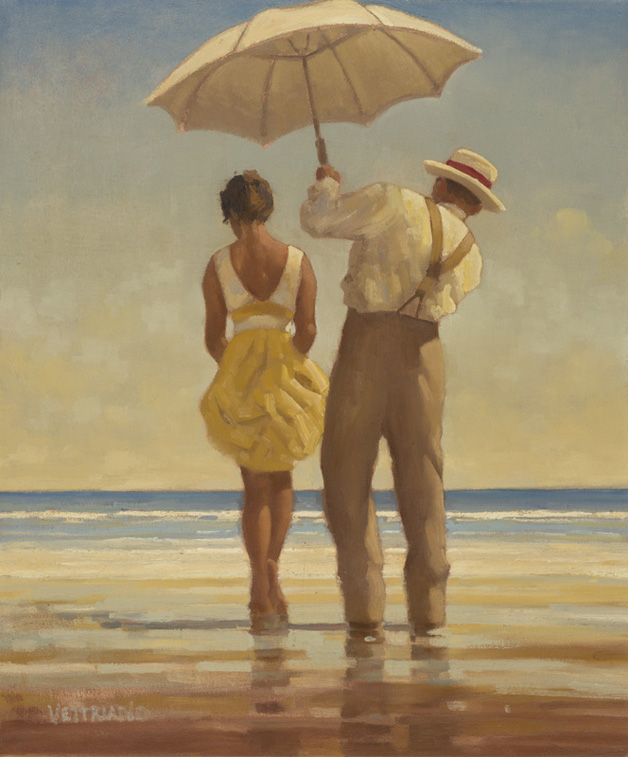
The 200th RSA Annual Exhibition runs from 9th May – 14th June 2026.
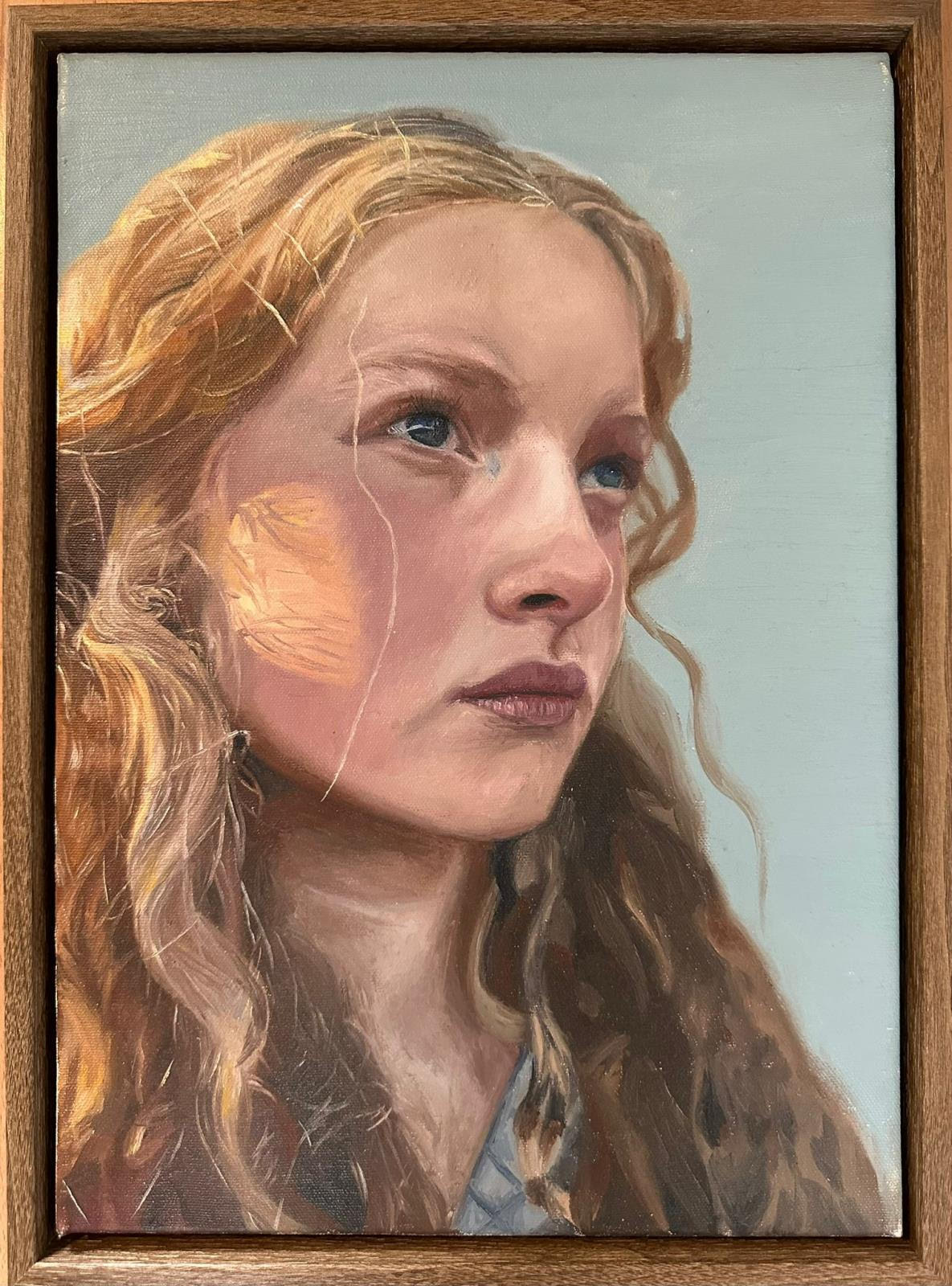
We are delighted to announce that Ruby Mitcham has won the RSA Jack Vettriano Award of £7,500 for ‘Sun Girl’, 2023.
https://www.royalacademy.org.uk/exhibition/summer-exhibition-2026

The 200th RSA Annual Exhibition runs from 9th May – 14th June 2026.
We are delighted to announce that Ruby Mitcham has won the RSA Jack Vettriano Award of £7,500 for ‘Sun Girl’, 2023.
https://www.royalacademy.org.uk/exhibition/summer-exhibition-2026
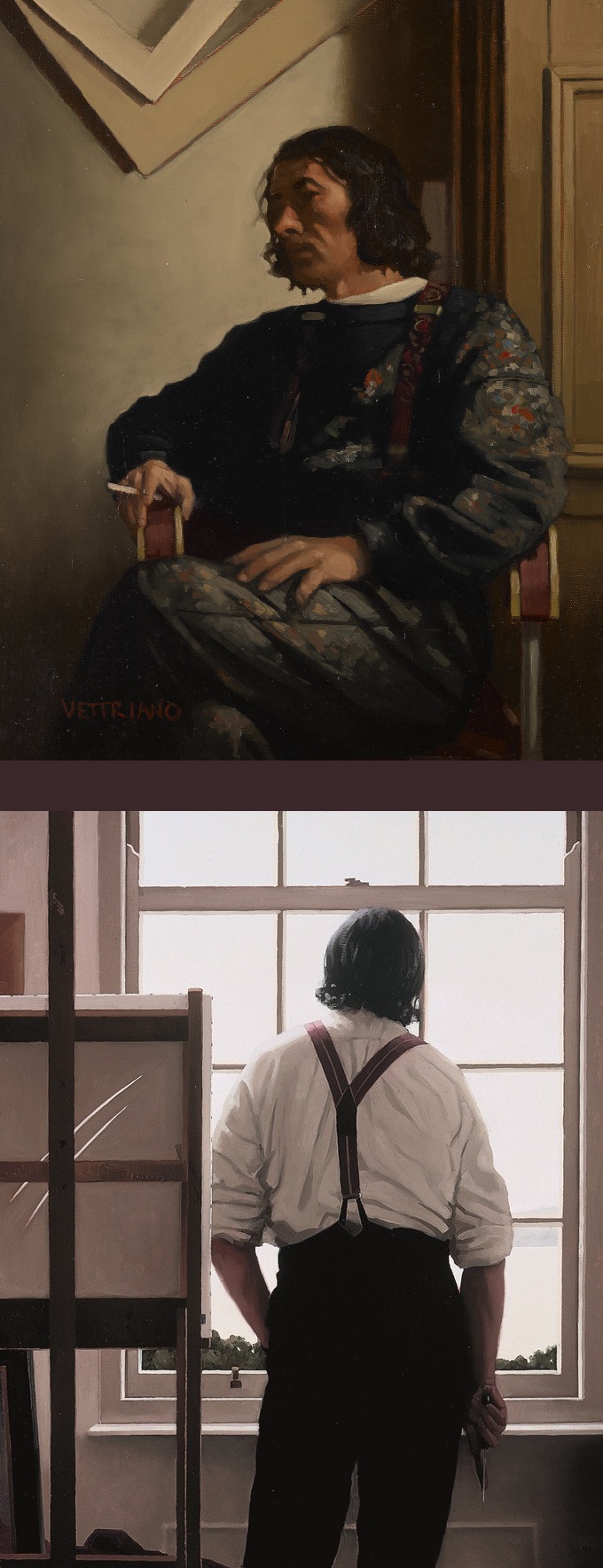
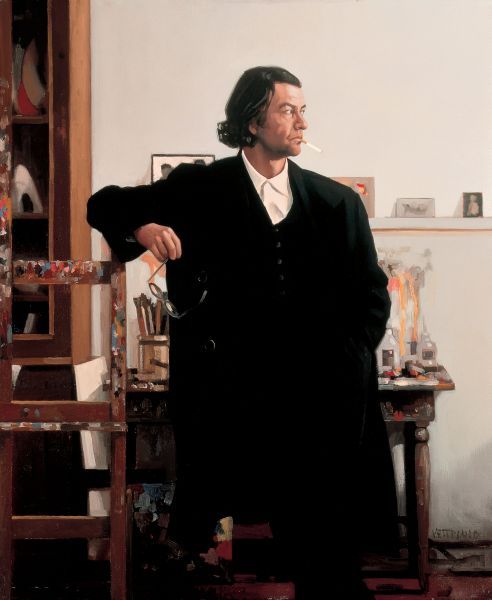
We are delighted to announce that ‘Portrait of the Artist’ is to go on display at National Galleries of Scotland : Portrait 1 Queen St, Edinburgh from 1st March 2026 commemorating the anniversary of Jack’s passing. The painting will be on display until early 2029 when it will be swapped with another Vettriano ‘Homage to Fontana?’. The paintings are on loan from Jack’s estate.
Portrait of the Artist, painted in 1993, is an early self-portrait by Vettriano and was painted a year after The Singing Butler. It depicts the artist taking a break from painting at his Edinburgh flat where he had a studio. A dramatic depiction of light and shade sets the scene for a moment of contemplation. The artist’s paint-splattered clothes emphasise the task at hand.
The cinematic Homage to Fontana? was painted later in 1999. The title and slashes in the painted canvas reference the Argentine-Italian artist Lucio Fontana (1899–1968) whose slashed canvases of the 1950s and 60s blurred the distinction between two and three dimensions to create ‘an infinite dimension’. Vettriano invites us to follow his act of contemplation in relation to what lies beneath the surface and beyond. The painting returned to Edinburgh in July 2025 after its inclusion in a Vettriano exhibition at the Palazzo Pallavicini in Bologna and is the largest of three versions of this composition. This painting was also exhibited at the major retrospective of his work at Kelvingrove Art Gallery in 2013.
Portrait of the Artist by Jack Vettriano | National Galleries of Scotland
We are delighted to announce that there will be a Jack Vettriano Award at the 200th RSA Annual Exhibition. This new award of £7,500 aims to support an artist who has not received formal Art School training and whose talent has so far gone unrecognised. Applications are now open – www.royalscottishacademy.org/opportunities/open-art/
To apply, click Open List of Awards from the link.
Jack submitted 2 paintings to the annual summer exhibition in 1988. The paintings were accepted and both were sold on the first day. As a result as a result Jack decided to give up work and paint full time.
It is with great sadness that we share the news of Jack’s passing over the weekend. He was not only an extraordinary artist but also a deeply private and humble man who was endlessly grateful for the support and admiration of those who loved his work. His paintings—capturing moments of intrigue, romance, and nostalgia—touched the hearts of so many around the world, and his legacy will live on through them. At this time, we ask for privacy as his loved ones come to terms with this loss. Thank you for all the kind messages and tributes already shared—your support means so much.
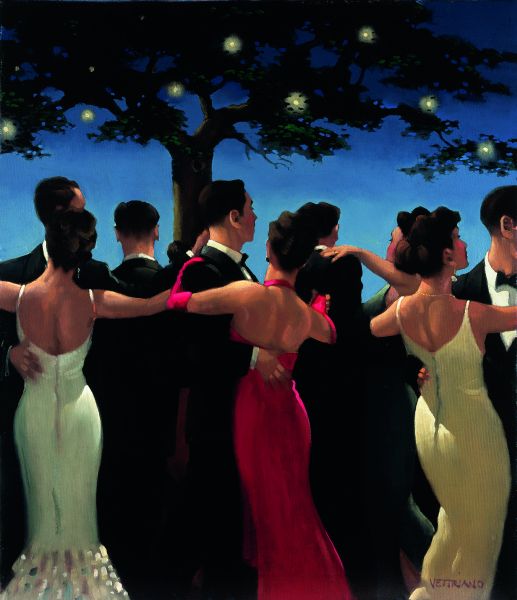
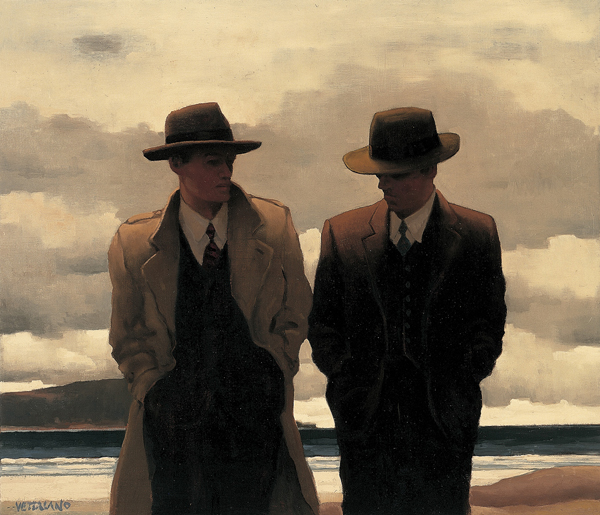
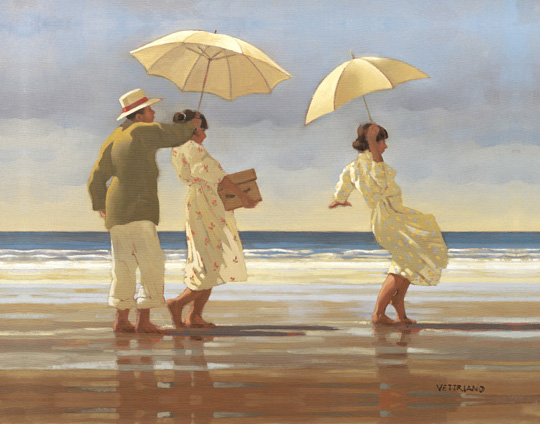
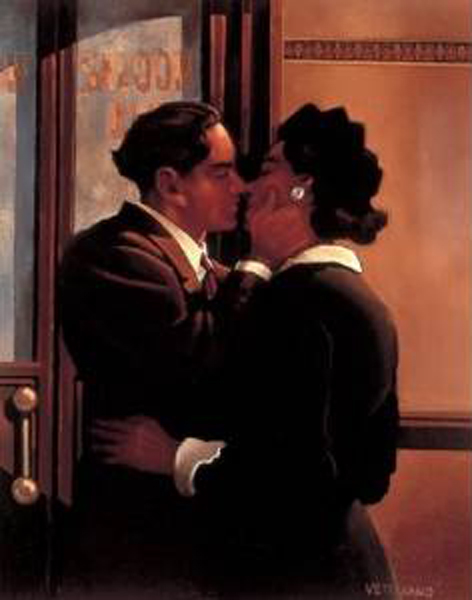
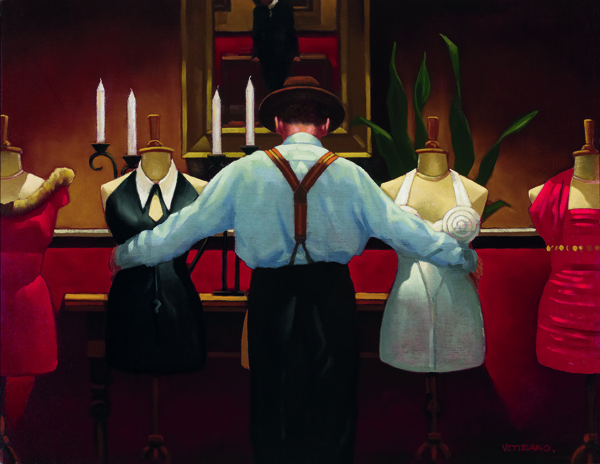
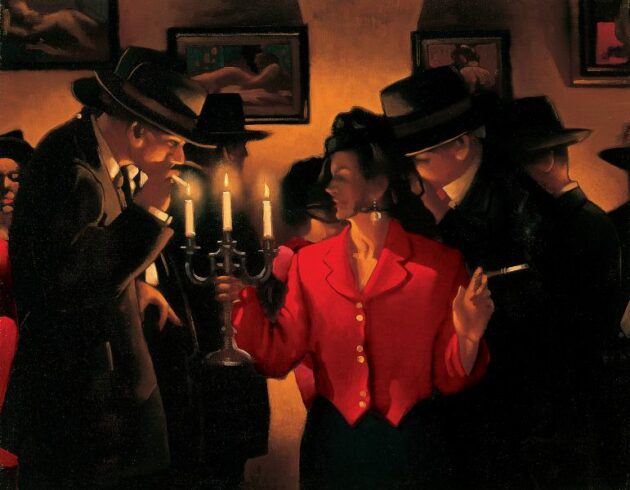
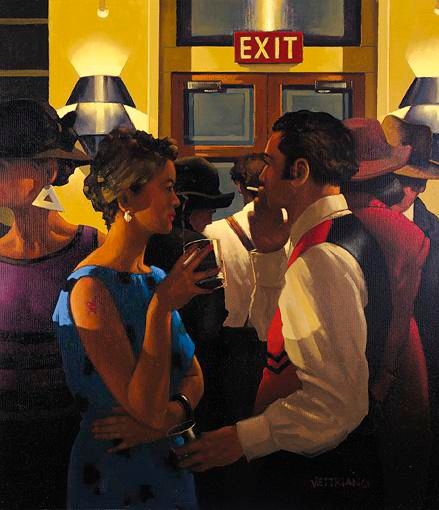
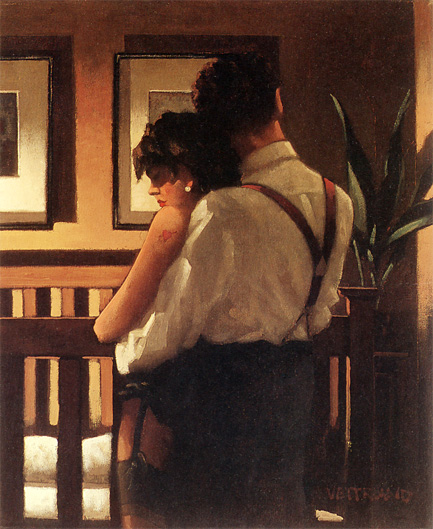
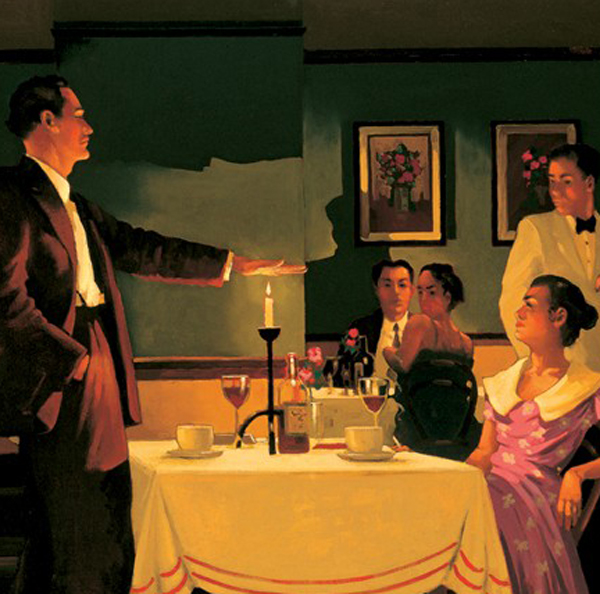
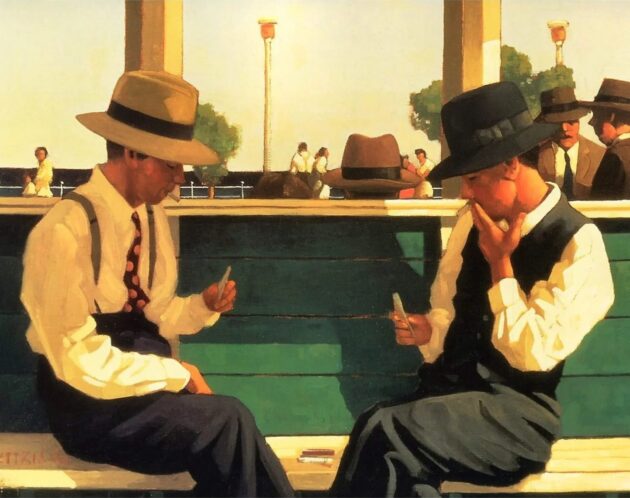
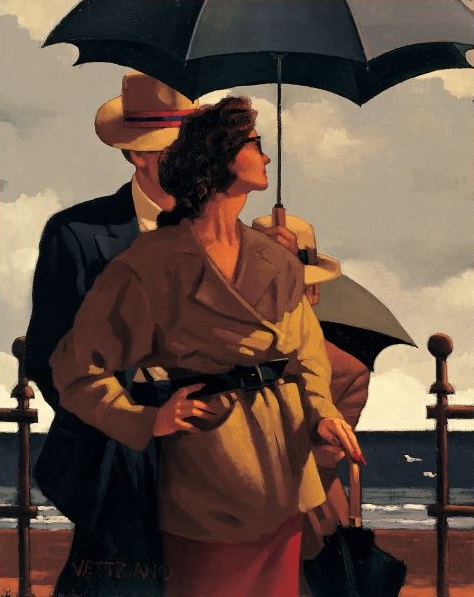
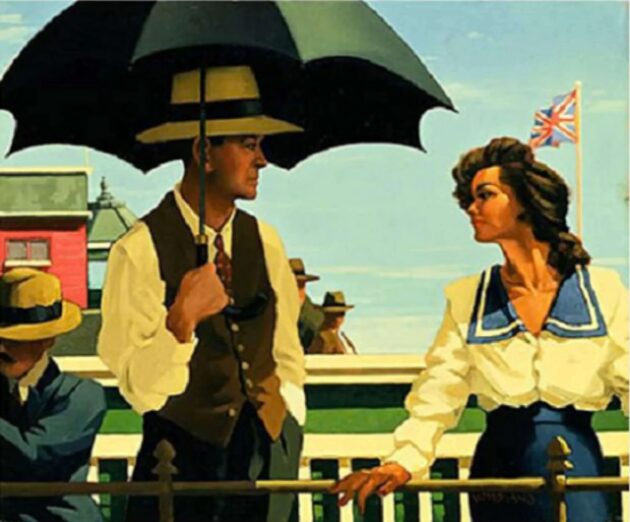
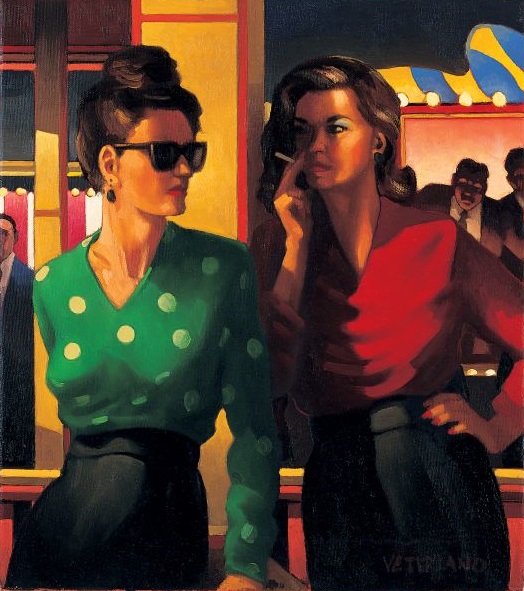
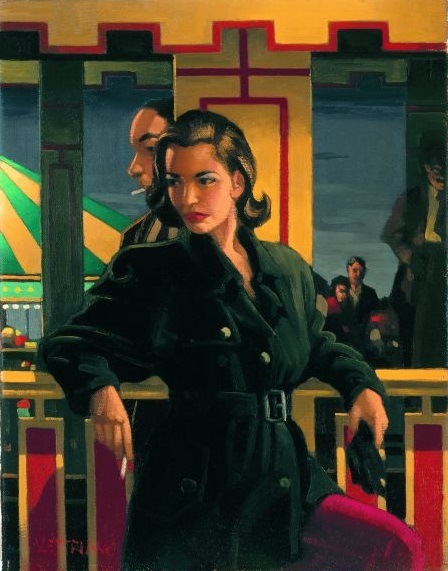
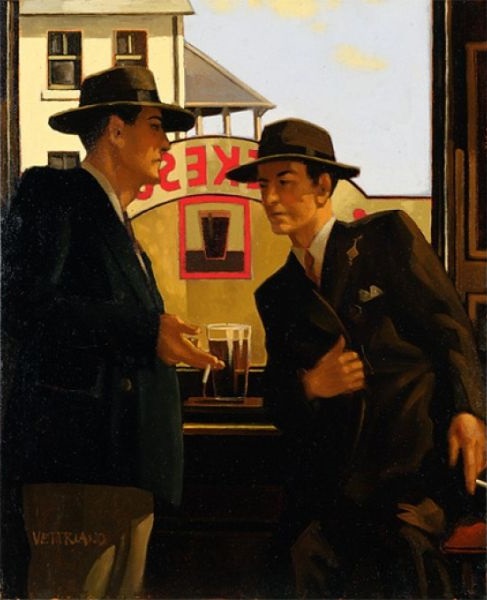
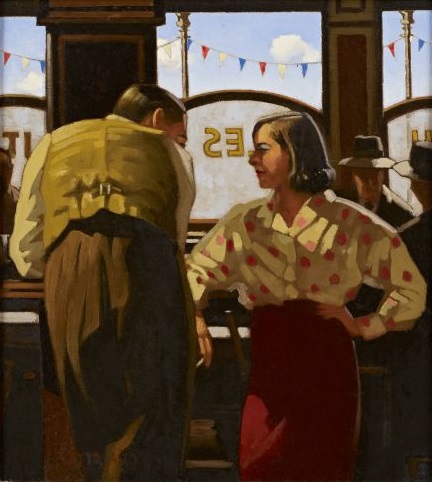
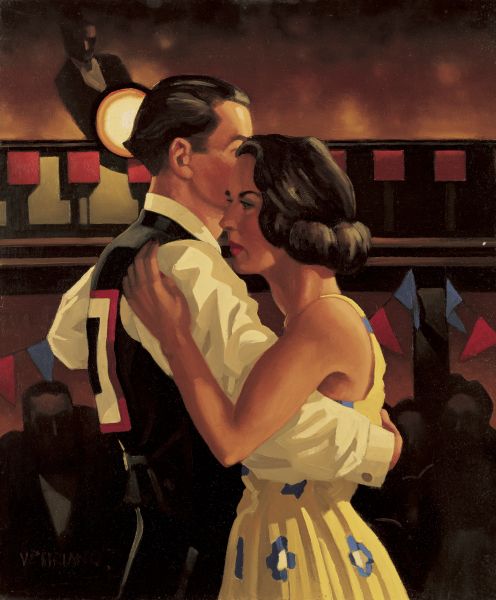
Jack Vettriano tells Stephen McGinty about tapping into fantasies, his National Galleries snub and why he doesn’t care about being cancelled.
The weather in Nice is not very nice. A warmth is in the air but the sky, so often an azure blue, is today a slate grey of dirty clouds. But Jack Vettriano doesn’t mind. The city on the French Riviera has
been his home for almost 20 years and he’s used to these fleeting scowls. He still keeps his flat in London and another in his native Kirkcaldy, but his grand suite of rooms, in a belle époque apartment
block just behind the famous Negresco hotel on the Promenade des Anglais, is home for most months of each year. Sitting in the apartment, which is decorated in his distinctive art deco design, Scotland’s most famous — and arguably most infamous — artist explains: “I just love the south of France. I go as far west as Cannes, as far east as Ventimiglia, which is over the border in Italy. I just
love it and what I enjoy almost as much as anything is the anonymity. I’ve been recognised three times. In Edinburgh it was difficult to get through a day. I don’t get off on fame.”
As W Somerset Maugham wrote, the Cote d’Azur is a “sunny place for shady people”.
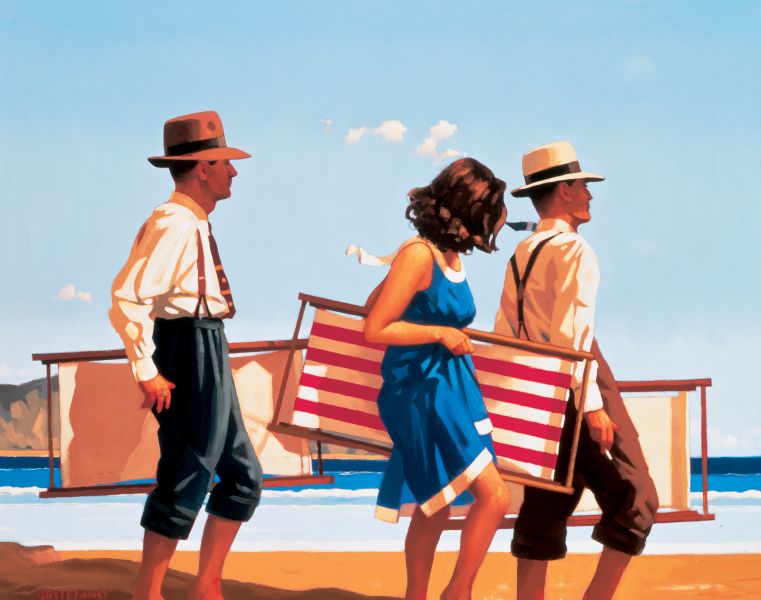
Yet next month Vettriano is coming home and stepping back into the spotlight for the launch of a big exhibition in his home town. Jack Vettriano: The Early Years at the Kirkcaldy Galleries contains over 50 works, including many of those from his most fertile creative period, between when he lived in Edinburgh in 1990 and moving to London in 1998, such as The Singing Butler and Mad Dogs. The exhibition will also include previously unseen early works, when in his apprenticeship in paint he copied works from the masters.
The decision to include clumsy early efforts is one of which he is quite proud. “It’s really important that people see that,” he says. “It gives them hope. They can look at my later work and be, perhaps, intimidated by it, if they paint, but if you look at the early work you can see clearly that I struggled.”
There is a refreshing honesty about Vettriano, a former miner who was given his first set of paints by a girlfriend on his 21st birthday and through dogged determination taught himself to conjure up
works that have both shocked and delighted the world. Celebrity collectors of his paintings include Madonna and Jack Nicholson, and in 2004 The Singing Butler, his most famous work, sold at
auction for £744,800 — then a record for a Scottish painting. If sold today it would be worth millions.
When the Daily Record revealed the basis for some of his images, he said he was proud to have created iconic images with only the help of a £17 art manual.
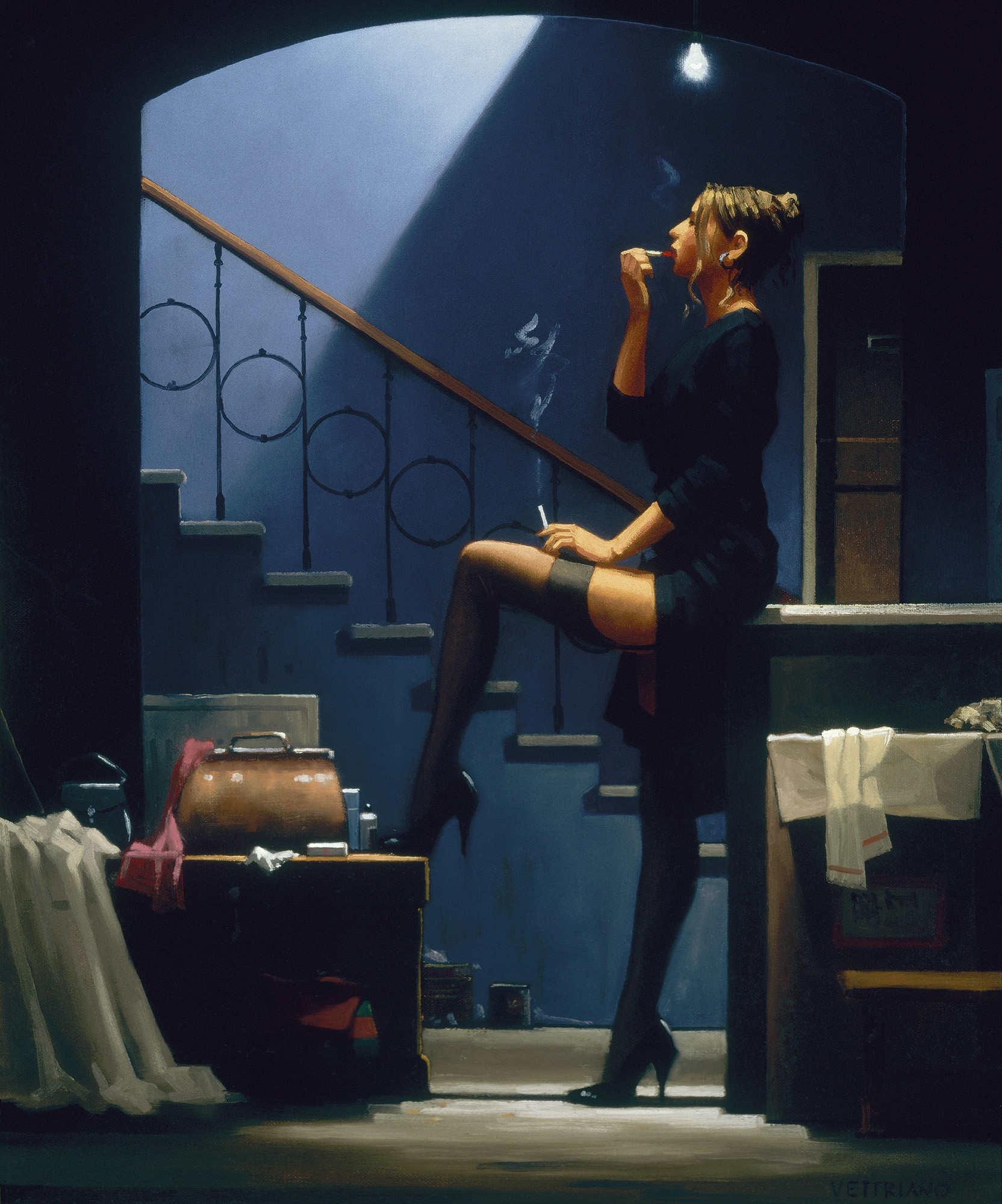
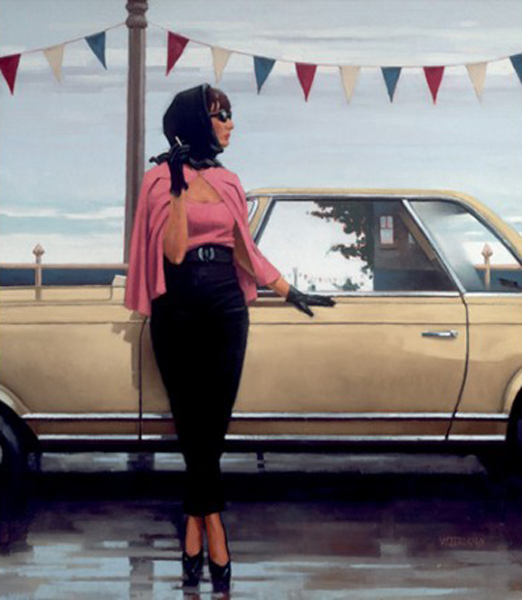
The world that Vettriano has created over the past 35 years, one canvas at a time, is a dark, emotionally desolate landscape of art deco bedrooms and sitting rooms where the desired and the unloved cautiously interact in an atmosphere perfumed by the musky scent of lust. The men have stepped into these rooms from a Forties film noir, all suits and braces and snap-brimmed fedoras, while the women are brunettes clad in corsets and silk stockings — what Martin Amis described as “the demonology” of lingerie.
I ask Vettriano why he believes so singular a vision of male desire has proven so incredibly popular with the Scottish public. He speak slowly, thoughtfully: “I think I touch on the needs — well, perhaps the sexual needs, or the romantic needs — of people, because I think most people have a tendency to shield their deepest needs and fantasies. And I think what I have done is I have created in my paintings a whole new world that they can step into and step out of, whereas I am stuck in it.”
The dry kindling that ignites his artistic inspiration is broken relationships. In the past he’s admitted to ending a love affair that felt too comfortable in order to experience the frisson of regret and recrimination then seek to imprison it in paint. In Edinburgh during the Nineties, he admits he was a frequent patron of prostitutes and the city’s massage parlours, and that the themes of dominance and desire found within the picture frame are largely autobiographical.
I ask if he ever regrets being too honest about the personal source of his artistic inspiration.
“I take the view that the public deserve more than a bag of lies. That is to say, I think anybody who looks at my work knows that I’ve been a naughty boy. I don’t do half of that stuff now as much as I would like to. But I think for honesty — it was Billy Joel who has a song called Honesty and who says it’s such a lonely word because everybody is so untrue. I think, yes. It’s why I’ve turned down opportunities to do a biography, because I wouldn’t paint over — sorry to use the term — I don’t want to sit with a ghost writer and talk a lot of shite and I can’t be honest because it’s all triple-X certificate.”
Given the current artistic climate, has he ever had concerns about being cancelled?
He falls silent for a few seconds, then asks back: “What do you mean by being cancelled?”
Well, I explain, his work frequently features young women in various states of undress for the explicit sexual desire of older men. Paintings such as A Sinister Turn of Emotion, in which a young woman prepares to remove her underwear ahead of corporal punishment; or Home Visit, in which a young prostitute in black slip and stockings spreads her legs for a besuited older client. Would older works still be “acceptable” today?
“Well, I don’t much give a f*** and you can quote me on that. Any artist worth the name has to be true to himself. People have called my work misogynistic, but I can tell you that women are the biggest fans of my work and that I find very interesting. I don’t apologise for what I have done and what I have painted. It is more or less autobiographical and I would argue that with anyone. I am being honest with myself and I’m not prepared to stand in line and be politically correct.”
Would he consider bending with the times?
“Christ, no. I’m not worried about that and my new paintings reflect that. I’m still painting from the heart. I’m still painting with integrity. I’m not painting so men can get off on them. I’m painting them because that’s the world I live in.”
He no longer visits brothels or hires escorts, and says he hasn’t for a long time, fearful of being a target for a media sting “like Angus Deayton”. Yet at 70, he is considering a long-term relationship, if he can find the right person. “I would like to meet someone, but I think I’d like her to have a flat next door. I still have hope that there is someone out there prepared to take me on and look after me.”
An ill-timed visit to the capital meant he spent the first Covid lockdown as the only guest at the Edinburgh Grand hotel in St Andrew Square: “I was like Jack Nicholson in The Shining.” Apart from a daily visit to Sainsbury’s for food, he lay on the bed and watched TV. He has a complicated relationship with Scotland’s capital, the home of the art establishment. His previous show was in Glasgow, and he has chosen to go home to Kirkcaldy for the latest retrospective. For in an act of stubborn perversity, the National Galleries of Scotland have long refused to buy a single painting by Vettriano, exuding the air that a grubby working-class oik has no place on their walls, despite his commanding public support.
It is a bone of contention on which Vettriano continues to chew. “The national gallery has an annual budget for new acquisitions and there is a committee who decide what artists’ work they want. If they were being honest to the public, because it is taxpayers’ money, they would give what the taxpayer wants and I would be fairly high on that list.”
When he met Sir John Leighton, the director-general of the National Galleries of Scotland — “we weren’t unkind, we were polite” — and asked when they would buy one of his paintings, he said
Leighton replied: “We are doing it in alphabetical order.”
When the skies clear over Nice, Vettriano likes to walk down to the beach. His work has long been divided between light and dark, between sex and romantic paintings such as Dance Me to the End of Love. In the past the ratio was 75 per cent dark and 25 per cent light. Nice, it seems, has brought out his brighter side. “I’d say it’s about 50-50 now.”
There are no paintings he regrets. “I would stand by everything I’ve done. Every painting I’ve put out. I think perhaps there might be one or two I would change but they were of their time. That was my mindset at the time when I painted them. But my new work that I’ve done is just as sexual.”
I ask what is on his easel, and he lets out a chuckle.
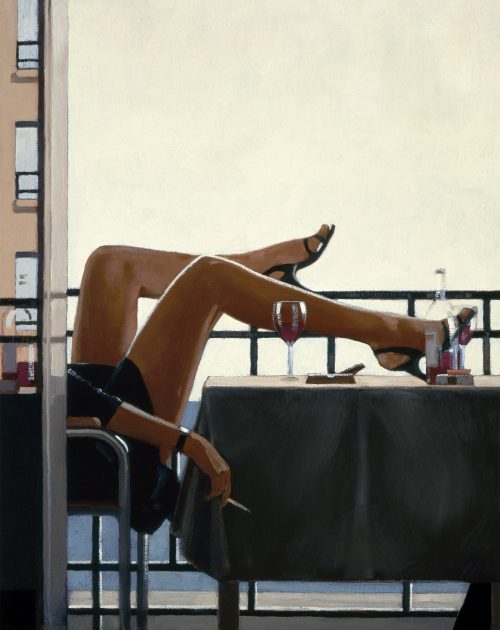
“It’s a women in her underwear and she’s on a balcony and she’s making a phonecall and she’s in fetish underwear — black — and she’s obviously, in my mind, she’s speaking to a client or a pimp and she’s going to make someone happy.”
By Stephen McGinty in the Sunday Times 15th May 2022
Media coverage from The Scotsman in anticipation of the re-scheduled exhibition, Jack Vettriano: The Early Years at Kirkcaldy Galleries in 2022.
Kirkcaldy Galleries is exhibiting a selection of paintings created by the artist from the time he began painting in his early 20’s until he moved to London in 2000. Among the work being showcased there will be a number of paintings signed with the artist’s birth name Jack Hoggan. These paintings show the diversity of subject matter and styles tackled by the young artist in learning his craft, eventually giving him the confidence and technical ability to develop his own identifiable style. The majority of the exhibition is devoted to work from Vettriano’s exhibitions in Edinburgh, Newcastle and London from 1990 – 2000 and included are a number of the artists most definitive and best loved works which were produced during this period. All the paintings are on loan from private collections and many of the paintings have never been on public display.
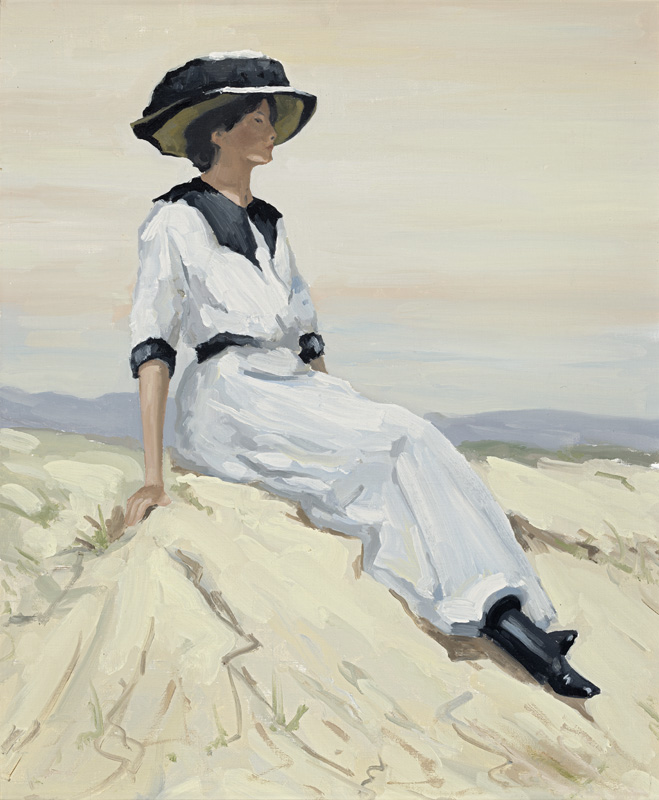
The painting shown here is an unsigned Hoggan after James Herbert Gunn which is part of the exhibition and can be seen at Kirkcaldy Galleries.
Jack Vettriano said ‘l’m delighted to be returning to my former home town of Kirkcaldy for a major exhibition of my early work which is fitting as its where my formative years as an artist began’.
From 17th June to 23rd October 2022 at Kirkcaldy Galleries
Exhibition sponsors are Dickson Minto.